Key Points
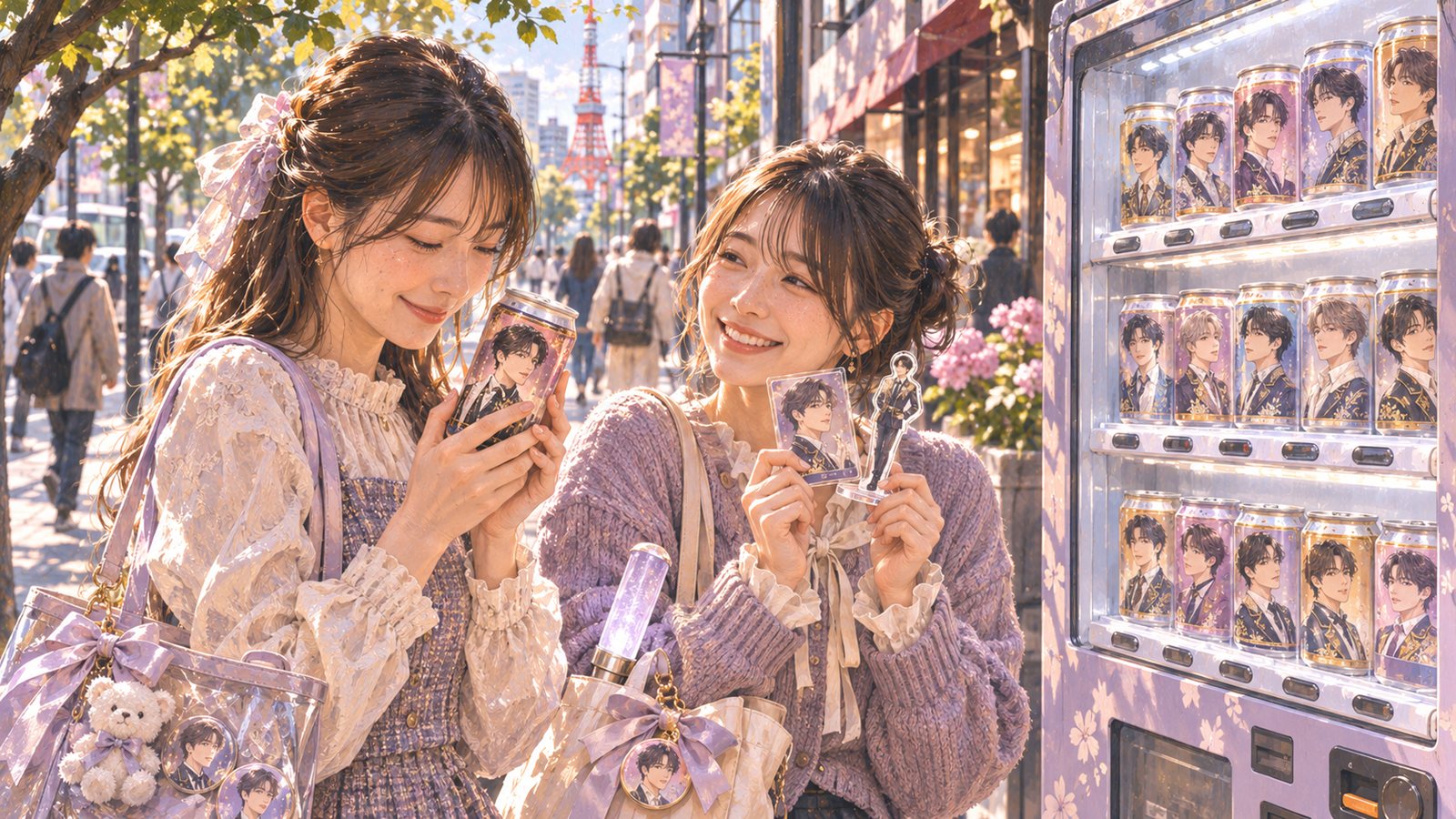
- Since 2023, Japanese beverage giant Suntory has run TAG-LIVE!, which sells oshikatsu merchandise through vending machines. Oshikatsu means supporting a favorite idol or character, often by collecting merchandise. The most common product is a can printed with characters: for example, a 900-yen can of lemon soda with eight label designs dispensed at random, where the label can be peeled off and kept as a sticker.
- The business is growing fast: 2025 revenue was triple the previous year’s, and 2026 is expected to triple again to several billion yen. Suntory aims to make it a business of more than 10 billion yen by 2028. Collaboration cans with the K-pop group Stray Kids sold about 210,000 cans in two months.
- Vending machines suit oshikatsu goods because they solve an old problem in the merchandise business: traditional merch has to be mass-produced, planning can take nearly a year, the buzz may be gone by the time it’s ready, and titles that don’t take off leave unsold stock. Suntory’s collaboration cans ship about one day after an order, can be made in batches as small as one 24-can case, and use the existing vending network for restocking and maintenance.
- The backdrop is a tougher drinks vending business: the number of soft drink vending machines fell from a peak of about 2.47 million in 2014 to about 1.95 million in 2025. Operators need each machine to earn more, and oshikatsu goods turn a machine that sells refreshment into one that sells fandom.
Starting June 22, 2026, an unusual can appeared in Suntory vending machines across Japan. It was printed with characters from the anime The Melancholy of Haruhi Suzumiya, held lemon soda and cost 900 yen. There were eight label designs, dispensed at random, so until you pressed the button, you didn’t know which character you would get.
In the same machine, an ordinary drink costs about 200 yen. This lemon soda cost more than four times as much, and the official account even made a map showing fans which machines carried it.
Why has the most ordinary of street-corner vending machines started selling fan collectibles? The answer has to do with how Japan’s vending machine business is changing.
Buyers don’t want the soda, they want the label
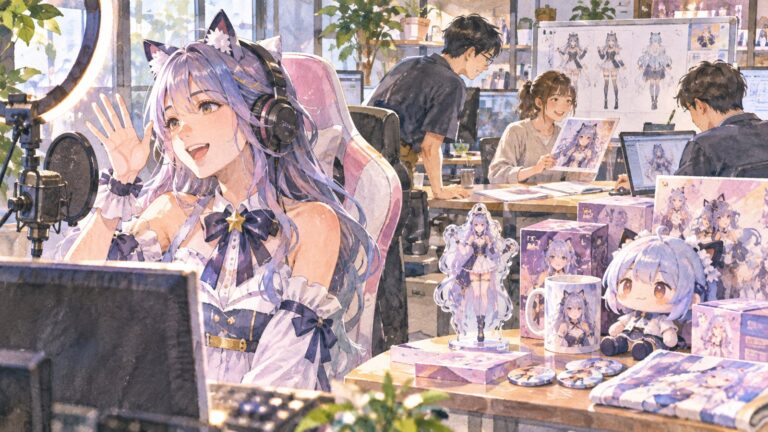
Suntory calls the service TAG-LIVE! and launched it in 2023. The can labels have two layers, and after drinking, you can peel off the outer layer and keep it as a sticker. So what this 900-yen lemon soda really sells is a collectible character sticker. The drink inside changes with each collaboration; it has been lemon soda, and it has been oolong tea. For fans, what they drink isn’t the point.
Most buyers are into oshikatsu (推し活), which means supporting a favorite idol or character, often an anime or game character or a singer, and many fans show their support by collecting merchandise. A 2025 consumer survey in Japan found that respondents spent an average of about 50,000 yen a year on their various interests, and more than 60% of those who consider themselves otaku have an oshi, a particular person or character they support.
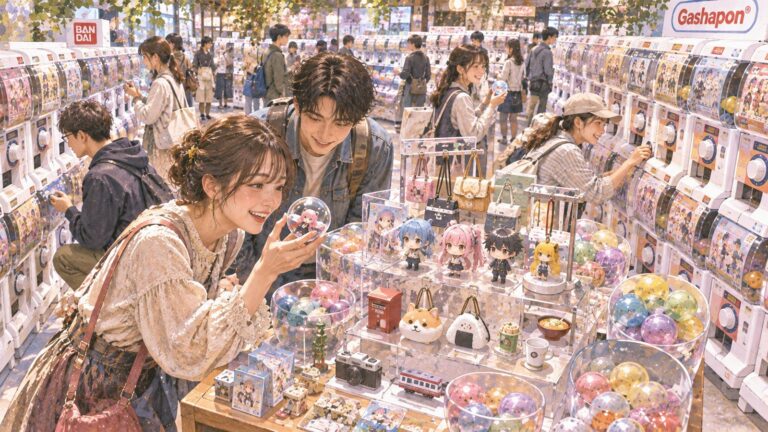
The random design also shows a good grasp of fan psychology. If you want all eight characters, or want to land your favorite, you have to buy several cans. It’s the same logic as gachapon capsule toys: the uncertainty itself is part of the fun.
The business has already reached scale. Over three years, it has collaborated with more than 200 titles and artists. Collaboration cans with the K-pop group Stray Kids sold about 210,000 cans over two months in November and December 2024. Singer Ayumi Hamasaki turned past album covers into cans, and the response was strong enough to warrant a second round.
A 200-yen drink has started to make people hesitate
Why would Suntory have its vending machines sell this kind of thing? It starts with the situation of the vending machines themselves.
In Japan, most roadside vending machines belong to beverage companies. The beverage company provides the machine for free and handles restocking and maintenance, while the site owner provides the space, pays for electricity and receives about 20% to 30% of sales. For the beverage company, each machine is like a branch store on the corner with no staff, and because it sells at list price, it earns better margins than supermarkets, which often discount.
This model made vending machines ubiquitous in Japan, but over the past decade the business has clearly become harder. The number of soft drink vending machines peaked at about 2.47 million in 2014 and fell to about 1.95 million in 2025, the first time below 2 million since 1994. Convenience stores are everywhere, and drinks keep getting more expensive: bottled water, tea and coffee in vending machines cost more than 20% more than a few years ago. A drink people used to buy without thinking now makes many of them wonder whether to walk to the supermarket instead.
The trouble is that each machine incurs electricity, restocking and maintenance costs no matter how much it sells. A machine that sells too little turns from a profitable branch into a money-losing one. Coca-Cola Bottlers Japan, the industry’s largest player, booked an 88.1 billion yen impairment on its vending business in 2025, effectively admitting that a batch of machines it had placed would not earn back their original value, and then began clearing out unprofitable machines.
Pulling machines is one path. The other is to make each remaining machine earn more. Suntory’s oshikatsu vending machines take the second path.
The old problem with merch: by the time something is a hit, it’s too late
Oshikatsu goods were already a big business, but merchandise makers have long faced a dilemma.
Traditional merch, such as acrylic stands and pin badges, only pays off when mass-produced, and going from planning to release can take nearly a year. By the time the goods are ready, the buzz around a title may have passed. Companies only dare to do this for surefire hits; for titles whose popularity is uncertain, making too much risks a warehouse full of unsold stock.
Suntory’s collaboration cans neatly sidestep this problem. The cans themselves are unprinted, and a new label makes a new product. Orders ship in about one day, and batches can be as small as one 24-can case. If an anime or an artist suddenly goes viral online, cans featuring them can appear in vending machines soon after.
The vending network itself helps enormously. Suntory already had machines across Japan and staff running restocking routes every week, so collaboration cans can go straight into about 5,000 existing vending locations nationwide, sold alongside regular drinks. There are also about 400 dedicated machines in shopping centers such as PARCO, Marui and AEON Mall, and machines can be set up temporarily during concerts or exhibitions. Restocking and maintenance run on the existing system, with no need to open a store or hire staff for each collaboration.
In spring and summer 2026, for example, when a commercial building in Yokohama hosted an exhibition of a popular illustrated character, Suntory placed a dedicated machine at the venue so visitors could pick up a can on their way out.
Daiki Takahashi, a section manager in Suntory’s strategic planning division who oversees the business, has said that drinks are something people use every day, and vending machines sit on the streets people walk every day, so fans can practice oshikatsu in their daily lives without making a special trip to a concert or a title’s “pilgrimage site.” He also said some oshikatsu machines earn more than regular drink vending machines.
Fast restocking has another benefit. A common problem with popular merch is bulk buying and resale at inflated prices, which keeps real fans from getting it. Takahashi said that because sold-out collaboration cans can be quickly remade and restocked, there’s little room for scalping, so they don’t see it as a major issue.
The idea came from a coffee stand where customers didn’t enter their own names
The business began with an unexpected observation.
In 2019, Suntory opened a coffee stand in Nihonbashi, Tokyo. Customers ordered through a messaging app, chose a flavor and could have their name printed on the bottle label. But many customers didn’t enter their own names; they entered the names of their favorite idols or characters. Coffee bottles printed with an oshi’s name became oshikatsu items among young people.
From this, Suntory realized drinks could become fan collectibles. In 2021 it launched a service letting customers choose from more than 2,000 label designs, and in 2023 it brought the approach to vending machines, creating TAG-LIVE!.
In 2026, vending machines started talking, selling acrylic stands and printing cards on the spot
After the success of the collaboration cans, Suntory launched three new formats at once in summer 2026.
The first is a vending machine that talks. When you press the button, the machine plays an idol’s voice or song. The first collaboration marked the 10th anniversary of the online singing group STPR (Strawberry Prince), with machines placed at about 100 shopping centers nationwide.
The second is TAG-LIVE! MART, which sells merchandise directly from vending machines. The first collaboration, with the idol-raising game Gakuen iDOLM@STER, sold newly drawn acrylic stands and badges from machines in shopping centers. Compared with opening a limited-time pop-up shop, a vending machine needs no staff and makes inventory far easier to manage. Suntory plans to expand to about 100 locations within two to three years. Today’s machines are designed for cans, so the first goods came in can-shaped containers; Suntory plans to modify machines later so they can sell products of other shapes.
The third is the most unusual: TAG-LIVE! CARD prints images onto clear acrylic cards inside the machine on the spot. The first collaboration was with the anime band project BanG Dream! It’s MyGO!!!!!, selling cards with a concert’s key visual. Because cards are printed on demand, any equipped machine can sell a design once the image file is uploaded, with no inventory needed. There are currently 14 machines at 9 shopping centers, with a goal of 250 machines in 2027.
From an investor’s perspective: the same machine, a different way to earn
TAG-LIVE! collaboration cans tripled their revenue in 2025, and Suntory expects them to triple again in 2026 to several billion yen. Its goal is for TAG-LIVE! as a whole to become a business with more than 10 billion yen in revenue by 2028. More noteworthy than the numbers is the thinking behind them.
A vending network carries heavy fixed costs: machines, electricity and restocking routes all have to be paid for up front, and each machine only pays off if it sells enough. Facing falling sales, most operators chose to remove underperforming machines and shrink their networks. Suntory instead uses the same network to sell higher-priced goods. A 900-yen oshikatsu can and a drink of around 200 yen can sit in the same machine and be delivered by the same restocking staff, yet a single sale differs by more than four times.
The business has risks. It depends on the popularity of titles, and booms come and go quickly; whether oshikatsu goods can support an entire vending network remains to be seen over the next few years. But making to order with very little inventory keeps the cost of experimenting low, which is exactly what the traditional merch business has struggled to do.
The street-corner vending machine, from selling refreshment to selling fandom
Japan’s vending machines once won by being available everywhere: when you were thirsty, there was one around the corner. Most of that convenience has now been taken by convenience stores.
Oshikatsu vending machines have found a different kind of value. They sell not refreshment but fans’ love for a character, and their strength is no longer just their numbers but their ability to bring a title that just went viral to street corners across the country quickly. The number of vending machines in Japan will keep falling, but the machines that remain will understand what their customers want better than ever.
Notes
- “900 yen per can” is the price of the Haruhi Suzumiya collaboration cans (June 22 to August 2, 2026); prices vary by collaboration.
- “About 5,000 locations” and “about 400 dedicated machines” follow the original reports, which refer to the number of locations and the number of dedicated machines respectively.
- The annual spending of about 50,000 yen is the average across 31 areas of interest in a Yano Research Institute survey (including respondents who answered 0 yen) and is not limited to oshikatsu merchandise.
- Soft drink vending machine counts are from Inryo Soken (Beverage Marketing Research Institute); some sources put the peak in 2013, while this article uses 2014.
Sources
- Business Insider Japan|サントリーBF、自販機を「推し活」の販路に。年3倍成長、IPビジネスと好相性のわけ (2026-06-18): about one day from order to shipment, minimum 24 cans, about 5,000 locations and 400 machines, about 210,000 Stray Kids cans, scale and targets for MART and CARD, Daiki Takahashi.
- Sendenkaigi AdverTimes|サントリーの「推し活自販機」、急成長の“納得の理由” (2026-06-18): 2019 Nihonbashi coffee stand, two-layer labels, tripled revenue, 10 billion yen target for 2028.
- Suntory|TAG-LIVE! new services announcement (2026-06-17): talking vending machines, MART and CARD, first collaborations and start dates.
- Real Sound Tech|自販機から推しのボイス・グッズが出てくる新サービス (2026-06-17): STPR machines at about 100 shopping centers, MART and CARD details.
- ORICON NEWS|Report on Suntory TAG-LIVE! (2026-06-18): Stray Kids, Ayumi Hamasaki’s second round, random dispensing.
- Gamepedia Premium|涼宮ハルヒ ラベル缶がサントリー自販機に登場 (2026-06-15): 900 yen, lemon soda, eight random designs, sales period, location map.
- Toyo Keizai Online|1本200円の飲料が売れない自販機で、なぜ900円の推し活グッズは売れるのか (2026-06-26): ordinary drinks at about 200 yen, TAG-LIVE!, more than 200 collaborations.
- Yano Research Institute|「オタク」に関する消費者アンケート調査(2025年) (2025-12-22): average annual spending of 50,472 yen, share with an oshi.
- Forbes JAPAN|390億円増益コカ・コーラBJH副社長が斬り込んだ「脱・聖域」改革 (2026-07-03): from 2.47 million to 1.95 million machines, 88.1 billion yen impairment.
- SoraNews24|Drink vending machines disappearing in Japan as number drops to lowest in 30 years (2026-04-11): first time below 2 million since 1994, prices up more than 20%.
- freee|自動販売機の設置 (2025-10-15): revenue share and electricity costs under full-service contracts.
- Money Post WEB|自販機事業で苦境に陥るコカ・コーラBJH (2025-09-16): high-margin model of selling at list price through vending machines.
Follow the story in person
Join a small-group trip to the places in our stories and meet the people who live and work there.
See trips and dates
Water Mirror is a Tokyo-based company that helps more people step inside industries and explore the stories and cultures of different fields around the world. We design in-depth learning programs for individuals, companies, schools and organizations, combining company visits, exchanges with professionals, local learning and hands-on experiences, so participants can see how industries really work and meet the people and stories behind them. Water Mirror Insights is our content media, telling the distinctive stories of industries, local cultures and people, so that reading sparks curiosity and leads readers to go and see for themselves.
About Water Mirror →