
Anime
Agriculture (1) Anime (9) Brewing & Distilling (1) Design (1) Fashion (1) Film & TV (3) Fisheries (2) Food & Dining (1) Funeral Services (4) Games (6) Idols & Entertainment (4) Manufacturing (3) Music (9) Performing Arts (2) Publishing (4) Restoration Services (2) Retail (2) Technology (1) Tourism (4) Toys & Collectibles (3) Traditional Crafts (4)
-

Why are nearly a fifth of Japan’s anime studios in one Tokyo ward? The anime towns of Suginami and Nerima
Before the internet, a hand-drawn key frame had to be carried by a person to the next company. Why Japan’s anime studios cluster in western Tokyo comes down to that journey.
-

Anime gives a song a story: why do overseas fans love Japanese anime songs? Starting with JoJo’s new opening theme
In October 2026, the opening theme of a new JoJo anime topped the Japan Songs charts in the US, the UK, France and Brazil at the same time. Why are the Japanese songs that overseas listeners play most so often anime songs?
-
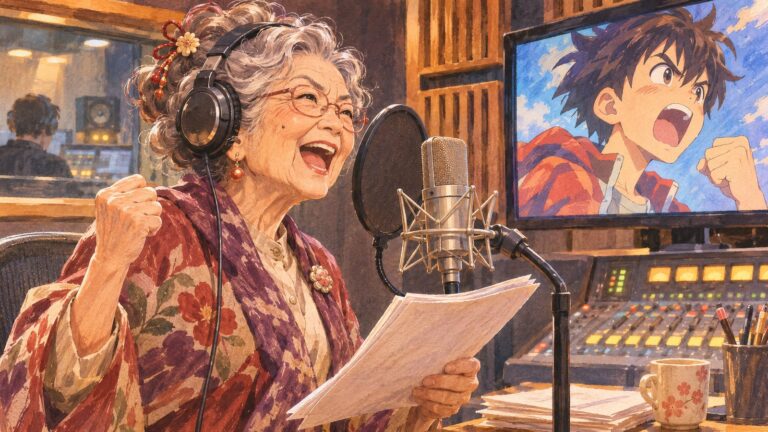
Why are boys in Japanese anime so often voiced by women? Starting with Masako Nozawa, the voice of Dragon Ball’s Goku
In the original Japanese version, Goku’s voice belongs to a woman born in 1936. The arrangement traces back to a very practical problem in the 1950s: dubbing was done live, and there was no room for mistakes.
-

¥15,000 an Episode, Yet They Fill the Tokyo Dome: The Real Reason Japanese Voice Actors Became Idols
A rookie voice actor gets ¥15,000 for an episode of anime, yet Nana Mizuki played two nights in a row at the Tokyo Dome. Voice work is priced low, but the voice itself is worth a lot. The idolization of voice actors began with that gap.
-

The Producer Behind Ghibli: Toshio Suzuki, the Editor Hayao Miyazaki Once Refused to Talk To
He can’t draw, and he isn’t a director. Yet Studio Ghibli’s films began with him sitting next to Hayao Miyazaki for three days.
-

Why Is Japanese Anime So Good When Animators Are Paid So Little? The Apprenticeship Behind a 200-Yen Drawing
One new animator drew 82 drawings in their first month and was paid less than 20,000 yen. Thirty-five years ago, the same kind of drawing paid 160 yen. Part of Japanese anime’s high quality is paid for this way.
-
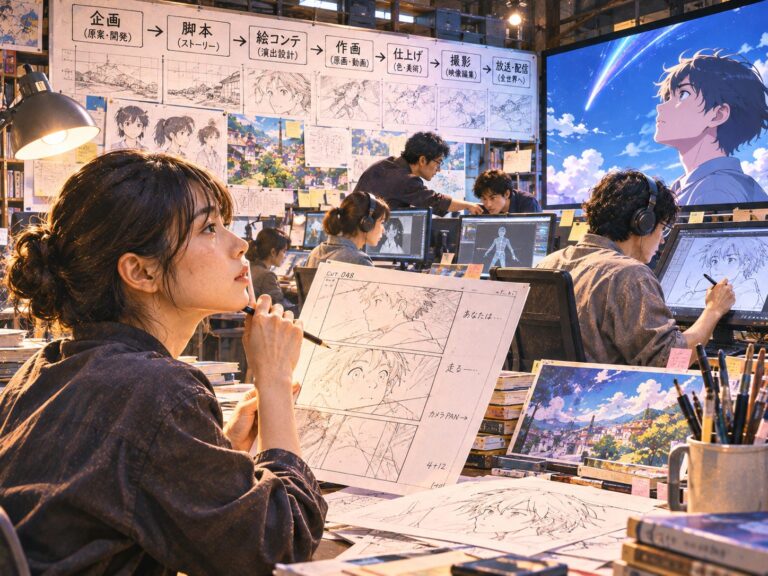
How Did a Manga With 4.5 Million Copies Become the Highest-Grossing Japanese Film Ever? How an Anime Is Born, as Told Through Demon Slayer
In spring 2019, Demon Slayer was a manga with about 4.5 million copies in circulation. A year and a half later, it passed 100 million. What changed its fate was an anime that aired only on local TV stations.
-

After the Tsunami, Tourists Stayed Away. Why Do Anime Fans Still Say They’re “Going Home” to Oarai a Decade Later?
An anime sending fans flooding into a disaster-hit town isn’t unusual. What’s unusual is that more than ten years later, they’re still coming back. Even the anime’s producer says “anime has no power to revitalize a town.” So what has kept the fans here?
-
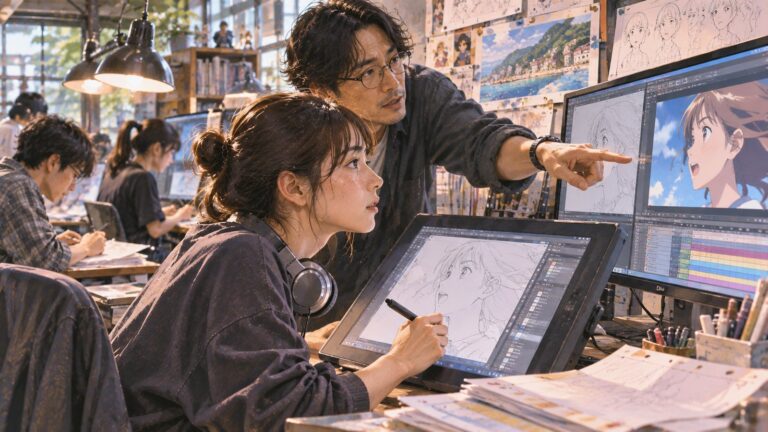
When Computers Replaced Hand-Painted Cels, Japanese Anime Ended Up Short of People. What the Last Tech Shift Says About How AI Will Change Animators’ Work
In 1997, the people in Studio Ghibli’s paint department put down their brushes and picked up mice, and thousands of bottles of paint were eventually packed off to a warehouse. Nearly 30 years later, AI has arrived at the same spot. Last time, Japan’s animators didn’t lose their jobs.