
Inside the Industry
Agriculture (1) Anime (9) Brewing & Distilling (1) Design (1) Fashion (1) Film & TV (3) Fisheries (2) Food & Dining (1) Funeral Services (4) Games (6) Idols & Entertainment (4) Manufacturing (3) Music (9) Performing Arts (2) Publishing (4) Restoration Services (2) Retail (2) Technology (1) Tourism (4) Toys & Collectibles (3) Traditional Crafts (4)
-

Why Did a Tenant Who Never Paid Rent Late Die in a Pile of Trash? Lonely Deaths Through the Eyes of Japan’s Special Cleaners
For 34 years, a tenant paid his rent on time every month. After he died, 500 bags of trash were cleared from his room. The special cleaner who did the job says a room lays a person’s whole life bare.
-

¥15,000 an Episode, Yet They Fill the Tokyo Dome: The Real Reason Japanese Voice Actors Became Idols
A rookie voice actor gets ¥15,000 for an episode of anime, yet Nana Mizuki played two nights in a row at the Tokyo Dome. Voice work is priced low, but the voice itself is worth a lot. The idolization of voice actors began with that gap.
-

Why Is Japanese Anime So Good When Animators Are Paid So Little? The Apprenticeship Behind a 200-Yen Drawing
One new animator drew 82 drawings in their first month and was paid less than 20,000 yen. Thirty-five years ago, the same kind of drawing paid 160 yen. Part of Japanese anime’s high quality is paid for this way.
-

One Postcard Decides Whether a Manga Lives or Dies: Half a Century of Weekly Shonen Jump’s Reader Survey
Every week, Weekly Shonen Jump decides which manga keep running based on a single reader postcard. A survey that asks only “Which three were the most fun?” helped create Dragon Ball, and has made life hard for slow-burning stories.
-

How Did a Manga With 4.5 Million Copies Become the Highest-Grossing Japanese Film Ever? How an Anime Is Born, as Told Through Demon Slayer
In spring 2019, Demon Slayer was a manga with about 4.5 million copies in circulation. A year and a half later, it passed 100 million. What changed its fate was an anime that aired only on local TV stations.
-

Mobile Games Are So Convenient. Why Are Japanese Players Still Paying 50,000 Yen for a Switch 2? It Starts With Nintendo Nearly Losing to Smartphones
Ten years ago, Nintendo was losing money year after year, and outsiders urged it to put Mario on smartphones. Today, a Switch 2 costing 50,000 yen sold nearly 950,000 units in Japan in a single week. What happened in between?
-
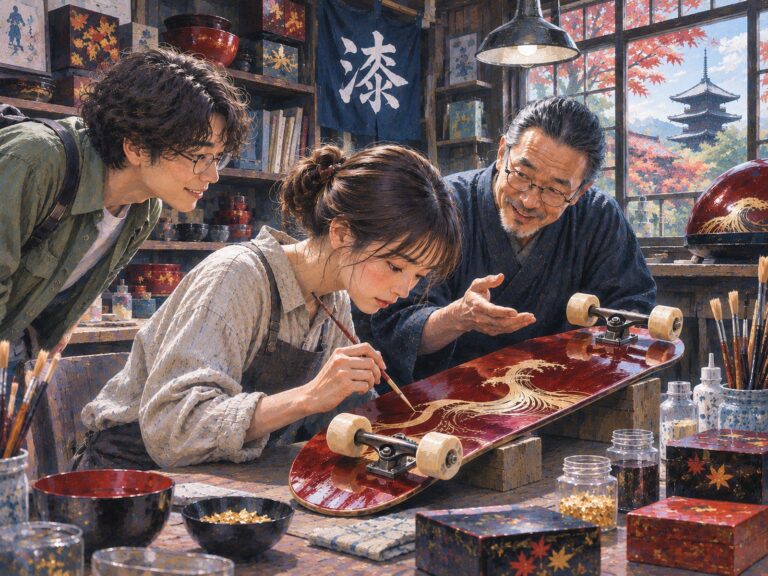
Why Is the Lacquer Used to Restore National Treasures Ending Up on Skateboards? A Century-Old Kyoto Lacquer House Finds a New Path for Japanese Urushi
A long-established Kyoto shop that supplies natural lacquer for restoring Nikko Toshogu Shrine is coating skateboards, surfboards and bicycles with it. It isn’t a gimmick. It’s a new path for Japanese lacquer after demand fell by 90%.
-

From a Park Sidewalk to the National Stadium: What Is Japan’s Idol Industry Really Selling? Ten Years of Momoiro Clover Z
In 2008, a few girls sang on a sidewalk in Tokyo’s Yoyogi Park to an audience of a few dozen. Six years later, the same group stood on the stage of the National Stadium, and about 110,000 people came over two days. What fans paid for wasn’t just a concert.
-

AI Can Already Write Songs. How Will Musicians Make a Living? What Hatsune Miku Tells Us About the Future of Japanese Musicians
In January 2026, Hatsune Miku sang songs from more than a decade ago on the big screen of a large Yokohama arena. What the audience had bought tickets to see were the four people in front of the screen playing drums and keys.
-

Why Buy the Same CD Ten Times When You Can Stream? Japanese Music Fans and “Participatory Consumption”
In 2024, the most-streamed song in Japan and the best-selling single were by two completely different acts. That gap reveals the real reason Japanese people still buy CDs.